


Niagara-on-the-Lake Chamber of Commerce

The 17th Annual Niagara Peach Festival showcases the peach industry for one day in August. The Festival is extra special this year, with an expansion of the ‘Peach of an Evening’ event held on the Thursday evening prior to the Niagara-on-the-Lake Peach Festival. The event promotes tourism in Niagara-on-the-Lake and builds awareness of the peach industry. The goals are to develop the demand for local produce, solidify strong relationships with growers, increase business involvement and visitors' length of stay. The Festival draws thousands of visitors each year.

Ontario Farm Fresh Marketing Association
 Marketing Farm Visits in the Greenbelt
The Ontario Farm Fresh Marketing Association, with 100 members in the Greenbelt, is developing a marketing strategy to increase the number of repeat customers and the frequency of their visits to these on-farm markets. An outreach plan will attract new visitors including members of the GTA’s diverse ethnic communities; create seasonal, low-cost promotional activities for OFFMA; and pursue co-marketing opportunities with other tourism operators in the Greenbelt. The project promotes agriculture and farms in the Greenbelt and Ontario.
Ontario Fruit and Vegetable Growers’ Association

The "Economic Impact Study Regarding Viability of Fruit and Vegetable Industry within the Greenbelt" project will assist the long-term goal of establishing policies to maintain the viability of this sector. The study produces an economic impact statement about the value of industry today and the impact of government policies, such as the Greenbelt. It also explores new activities such as developing value-added products, undertaking product research and creating strategic marketing alliances.
Grape Growers of Ontario
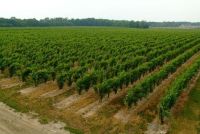
The replant strategy converts up to 25% of total acreage from juice grape production to wine grapes, which typically experience higher market demand.
Representing over 600 grape growers in eastern, southern and southwestern Ontario, the Grape Growers of Ontario provides resources and support to maintain a healthy market for grape growers.Farmers in Niagara face an uncertain future after a local company announced an end to manufacturing grape juice. Many of these farmers want to transition to growing new products, including high quality wine grape varieties that would elevate Niagara’s reputation as a world renowned wine region. This project invests in that goal.
Local Food Makes for Healthy Economy and a Healthier Planet
Greenbelt Foundation premier sponsor of Ontario Fruit & Vegetable Convention, February 21 - 22, 2007(Brock University, St. Catharines) – The Friends of the Greenbelt Foundation is pleased to support Canada’s foremost horticultural event with a premier sponsorship of the 2007 Ontario Fruit & Vegetable Convention. “This is the second year that we’ve supported this important learning and networking opportunity,” says Burkhard Mausberg, President of the Foundation. “Our continuing support helps bolster growing interest in local foods, in turn improving the livelihoods of fruit and vegetable farmers.“ With polls showing over 89% of public support for the Greenbelt‘s goal of protecting area farmland and curbing urban sprawl, the Friends of the Greenbelt Foundation has awarded to-date over $4.4 million in grants to assist farmers in the Greenbelt. “On another level,” Mr. Mausberg continues, “consumers know that buying cheap fruit and vegetables from far away places directly contributes to transportation-related smog and greenhouse gases. If we are serious about fighting global warming, we need more events like this to find real answers to lessening our dependence on imported foods.” Despite Ontario consumers’ increasing interest in fresh local food, it remains difficult for farmers to get their locally-grown fruits and vegetables on store shelves and dinner tables. The Friends of the Greenbelt Foundation is helping organizations bridge that gap. “Promoting local agriculture is critical,” Mr. Mausberg concludes. “Greenbelt lands, and those that work that land, can provide us with most of the fresh and nutritious food we now seek in our efforts to lead healthier lifestyles.” “The future of the Greenbelt,” adds Bob Chorney, Executive Director of Farmers’ Markets Ontario, “relies on market conditions that allow our fruit and vegetable farmers to make a good living growing our food. With support from the Foundation, we are able to increase the collective knowledge, competitiveness and profitability of our Ontario fruit and vegetable growers. Funds also help get our local food message through to the purchasing public, thereby increasing our growers’ viability.” Burkhard Mausberg’s presentation “Greenbelt Links – Two Years and Counting” takes place on Wednesday, February 21 at 10:30 am at the Walker Complex of Brock University, St. Catharines. For further information, please contact: Donald Wiedman, Friends of the Greenbelt Foundation tel.: (416) 960-0001, ext. 305, cell: (416) 559-3934 email: [email protected]
Photographing the Natural Environment
From February through April 2007, Daniel's of Nobleton Restaurant and Country Inn will host a photographic exhibition of Garry Conway's work. Garry's photographic explorations have resulted in many unique photographs of the natural environment. "The camera is simply a tool that I use to focus my vision and my thoughts. The concentration required to take a photograph helps me understand more about what I am seeing and the natural world that I live in." He uses the camera and lens as a way of "seeing" nature more closely and to share his passion with others. For more of Garry's work, visit www.gconwayphoto.com.
Greenbelt Needs Vital Farming Community
Jordan Station, January 27, 2007 – "Agriculture in Ontario’s Greenbelt is an important concern,” Burkhard Mausberg, President of the Friends of the Greenbelt Foundation told delegates attending the first Greenbelt Public Forum focusing on how to best preserve Ontario’s most valuable farmlands. “Protecting local agricultural land is critical,” said Mr. Mausberg. “It provides fresh and nutritious food, lessens our dependence on imported foods, and reduces transportation-related pollution such as smog and greenhouse gases. At the same time, farmers need economic and market conditions that allow them to make a good living growing our food.”
Conservation Foundation of Greater Toronto
 Gateway to the Greenbelt
Since its launch, the exhibit has circulated to 25 venues across the Golden Horseshoe, and has had exposure to over 450,000 people.
Supporting the Toronto Region Conservation Authority, the Conservation Foundation of Greater Toronto works to make Toronto a greener and healthier place to live, and uses a major traveling Greenbelt exhibit to help spread the word.
Thousands of visitors to the GTA’s conservation areas can explore the Greenbelt through an interpretive traveling exhibit that weaves a story celebrating the past and present farming and rural cultures of communities in the Greenbelt, and highlights important natural features.
Oak Ridges Moraine Symposium 2007
The Oak Ridges Moraine Symposium was held on the fifth anniversary of the Oak Ridges Moraine Conservation Plan, February 12, 2007 at the Radisson Hotel in Markham. The event was well attended with over 250 participants. The Honourable Jim Bradley, Minister of Tourism and Minister responsible for the Greenbelt and Oak Ridges Moraine Foundations kicked-off the symposium as keynote speaker. The Monday evening Dinner Banquet on February 12th featured guest speaker Elizabeth May, Leader of the Green Party of Canada. The Moraine for Life Awards were also be presented that evening. David Lewis Stein, Innis College/University of Toronto was the Closing Plenary Session Speaker. Three main themes, Land, Water and Community well-being, were discussed through workshops, that challenged the attendees to:
Friends of the Greenbelt Foundation announces $1.4 million environmental farm practices grant
October 3, 2006 (Toronto) - The Friends of the Greenbelt Foundation announces a $1.4 million grant to help farmers with their costs to improve the environmental practices on their land. This money will be used to clean up water, protect wildlife and reduce pesticides.